

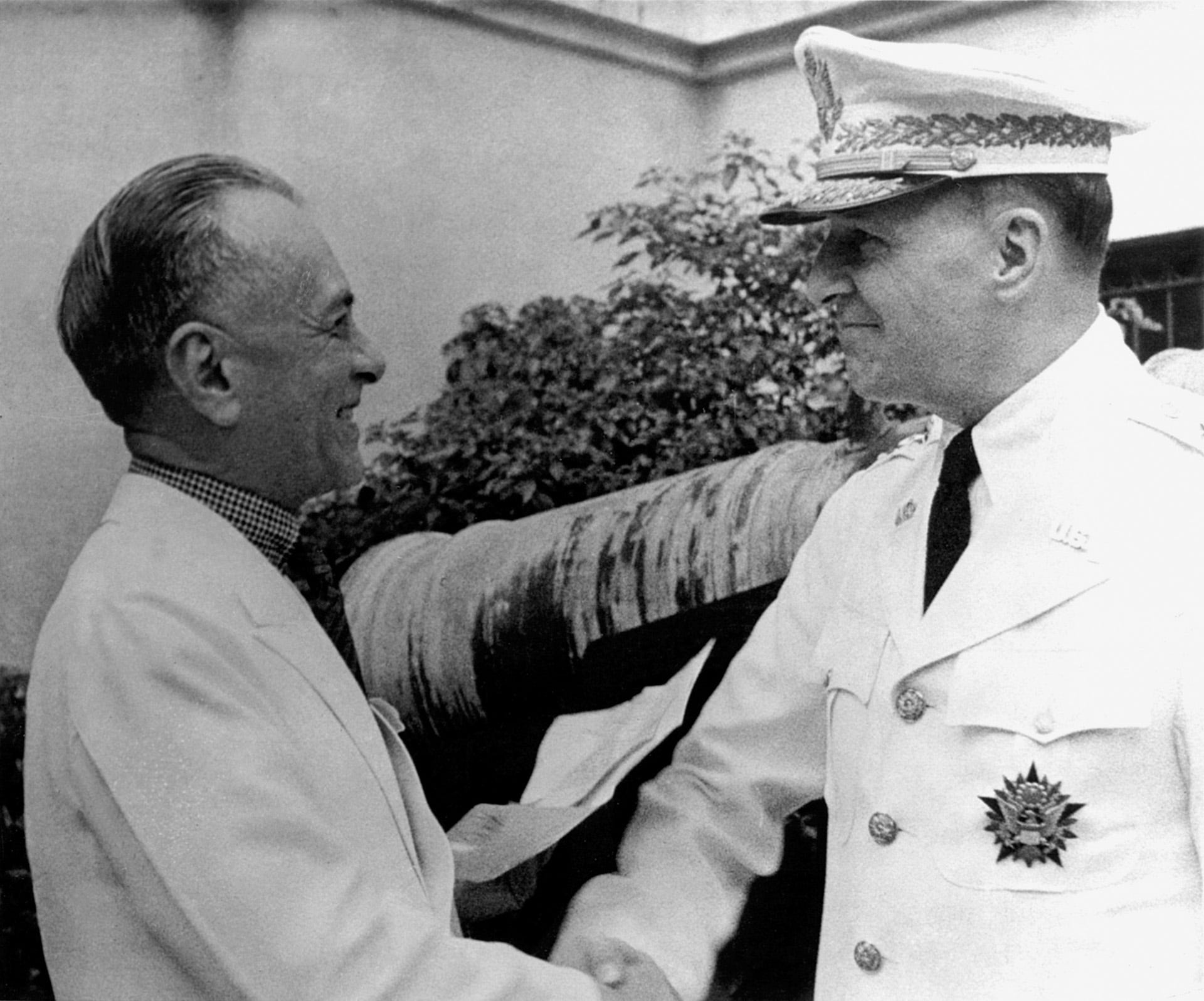
Philippine President Manuel Quezon and General Douglas MacArthur (Source: Warfare History Network).
Before departing Corregidor on his bold dash to Australia, General Douglas MacArthur famously packed only one suitcase. Quietly, and a few weeks before his escape, he arranged for something far more valuable to leave the Philippines for later use: a $500,000 gift from the government of President Manuel Quezon, along with an additional $140,000 gift for three senior aides.
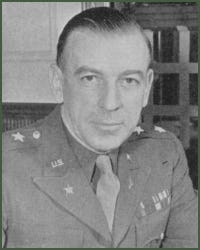
General Richard K. Sutherland (Source: Generals.dk).
A Hidden Transaction
Professor Carol Petillo of Boston College discovered the record of this payment in 1980, sixteen years after MacArthur’s death, in the papers of his chief of staff, General Richard K. Sutherland. In her book Douglas MacArthur, the Philippine Years, she wrote (page 205):
As concrete proof of the regard that the Filipinos held for the Military Mission, Quezon presented Douglas MacArthur, Richard K. Sutherland, Richard J. Marshall, and Sidney L. Huff with $640,000 in U.S. currency. Seldom, if ever, have American military officers received such evidence of high esteem.
The funds were disbursed on January 3, 1942, by President Quezon through Executive Order, in gratitude for the work these four officers had done since 1935 to build the Philippine national defense. Quezon’s Order was effusive in its praise:
It referred to the present “magnificent defense” of the Islands, and then went on to offer the highest praise of the General and his staff: “They stand as the outpost of victory of individual freedom and liberty over slavery and tyranny in the mighty struggle that engulfs the world. Win or lose, live or die, no men have ever carried a heavier burden or weightier responsibilities with greater resolution and determination. The record of their services is interwoven forever into the national fate of our people.”
Professor Petillo also uncovered documents that cast MacArthur in a less favorable light. They included his February 15, 1942 request to the War Department to instruct the Chase Bank to make the transfers, and a February 19 exchange between the War Department and Chase Bank that cited President Franklin D. Roosevelt and Secretary of War Henry L. Stimson as authorities for the transaction.
MacArthur’s $500,000 payment in 1942 would be worth approximately $10 million, adjusted for inflation, in March 2026.
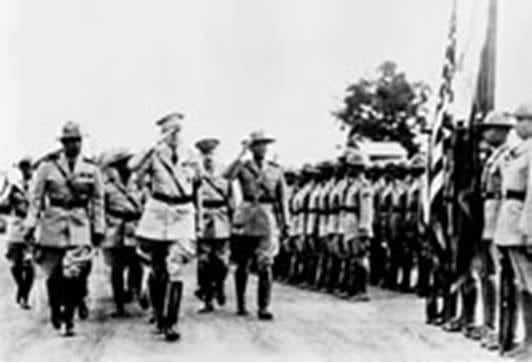
General MacArthur inspects the Philippines Scouts, 1936 (Source: John.Curtin.edu.au).
The Origins of the Wartime Bonus
Such payments can appear improper, but they make more sense when viewed within the contractual arrangement MacArthur had negotiated with the Philippine government. His biographer Walter Borneman explained (page 140):
The gift was related to MacArthur’s 1935 deal with Quezon to build the Philippines a first-rate army over a ten-year period. Despite the fact that at the time, and again after his recall to active duty, MacArthur was receiving a US paycheck, President Roosevelt and the War Department approved his receiving additional compensation from the Philippines—not a foreign government but still an American territory—for services rendered. In addition to his Philippines salary of $18,000 per year and an annual expense allowance of $15,000, MacArthur was to receive, as a bonus, 0.46 percent of the total ten-year defense budget of the Philippines.
Despite the rather dismal performance of the Philippine military, Quezon chose to bestow this bonus, calculated at $360,000 for the ten-year period and $33,000 in salary and expenses for each of the remaining four years (1942-45) of the contract, upon MacArthur immediately. These amounts totaled $492,000, and it is possible that in their discussions of the matter prior to Quezon’s departure from Corregidor, the Philippine president and MacArthur simply agreed to a round figure of $500,000.
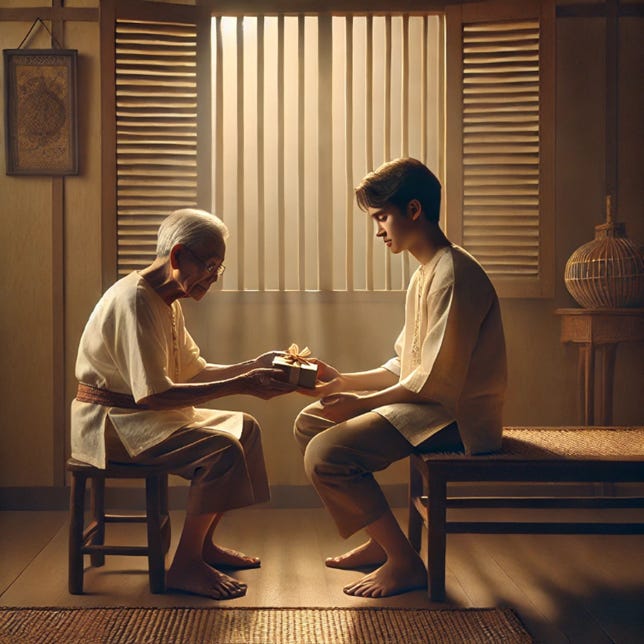
The Filipino practice of “utang na loob” – the debt of gratitude (Source: TaasNooPilipino).
A Gesture Rooted in Filipino Tradition
Carol Petillo offered another explanation in an article for the Public Broadcasting Service’s American Experience website:
Regarding Quezon’s offer, she cites the Filipino concept of “utang na loob,” a kind of reciprocal bond of obligation between family or close friends. From his Asian/Filipino perspective, Quezon was cementing an already close bond that existed on two levels: on a personal level, between MacArthur and himself; and on a national level, between their two countries. Thus the money was both a reward for MacArthur’s past service to the Philippines and a further guarantee that MacArthur (and by extension the U.S.) would do everything in his power to help the Filipinos in the days ahead. MacArthur, having spent many years living in the Philippines, could easily have seen the situation the same way. Yet his acceptance of the gift is more problematic.
Walter Borneman added further context:
There is circumstantial evidence that these transactions did not sit well with the people asked to approve them in Washington. For once, George Marshall does not appear to have been in the loop. Secretary of the Interior Harold Ickes, never a MacArthur fan, was so unclear about the matter that he believed Jonathan Wainwright was one of the recipients. Secretary of War Stimson, previously a MacArthur supporter, remained mum, but Stimson became increasingly critical of MacArthur around this time, which may or may not have been related to the transactions.
The Question of Motive
Historians continue to debate whether the payment authorized by President Quezon influenced MacArthur’s determination to return to the Philippines. To readers less familiar with his long history in the islands, the payment can appear unseemly. Jonathan Horn, whose deeply researched book The Fate of the Generals offers a balanced view of MacArthur, takes a longer perspective. He wrote (page 149):
It is no defense of the transaction to note that the bond between MacArthur and the Philippines was already strong enough. In the absence of any financial incentive the force of history, the ties of family, and the call of honor all would have conspired together to draw him back. These were the islands where his father had fought and found the key to America’s destiny as a Pacific power. These were the islands whose people and culture had charmed him as a young officer and whose beaches he had committed himself to defending as a general officer. On these islands, without so much as a goodbye, he would leave the tens of thousands of starving soldiers who had retreated to Bataan on his whim and found what hope they could in the promises he had made but could not make true.
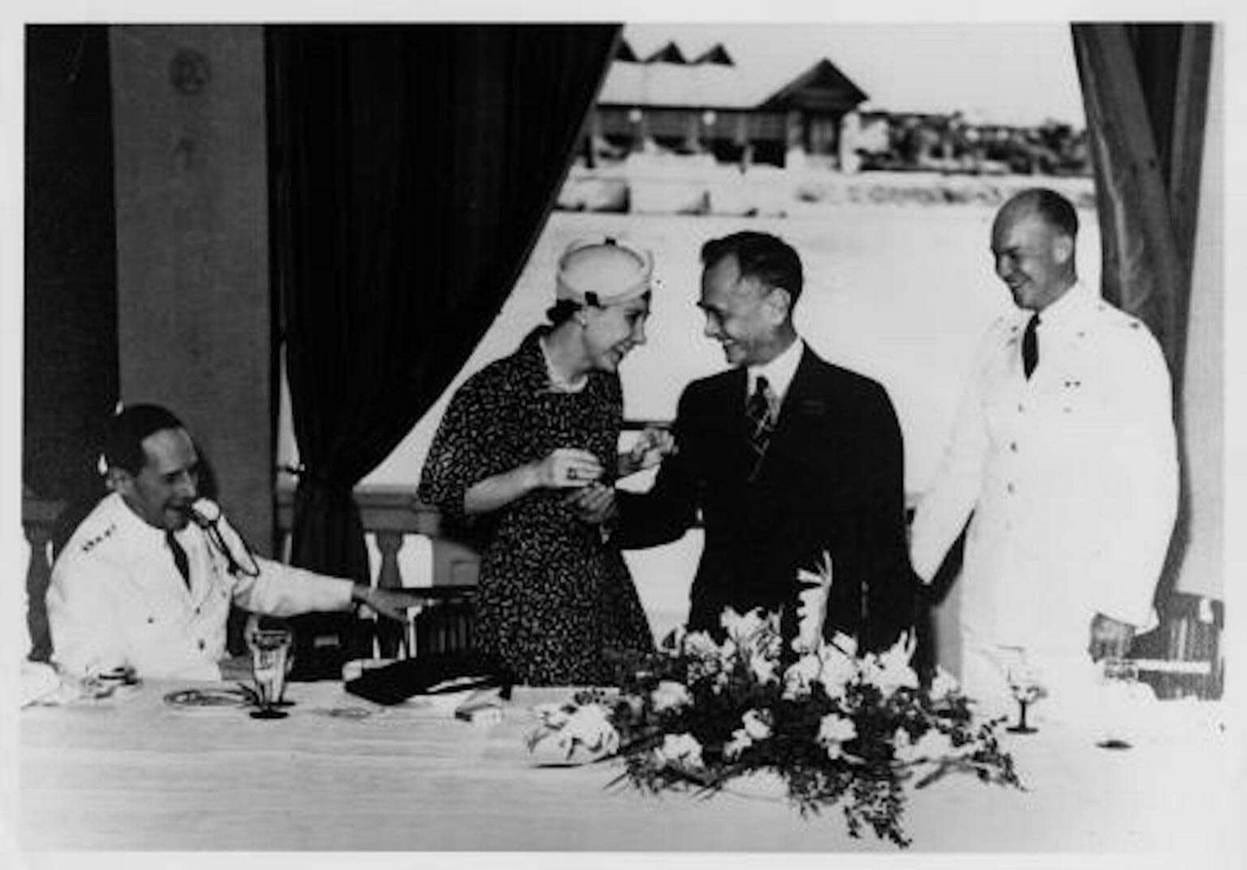
Luncheon honoring Dwight Eisenhower hosted by Philippine President Manuel Quezon. Left to Right: General Douglas MacArthur, Mamie Eisenhower, Manuel Quezon, and Dwight D. Eisenhower, Manila, Philippines, 1939 (Source: Inquirer.net).
Why Historians Like Ike
Philippine President Manuel Quezon was prepared to extend similar generosity if it served his country’s interests. When he arrived in Washington in April 1942, he offered an award to Brigadier General Dwight D. Eisenhower, who had spent four years in the Philippines as MacArthur’s chief of staff and was now serving as Deputy Chief of Staff of the Army, working directly under General George C. Marshall.
Eisenhower refused. On June 20, 1942, he wrote a Memorandum of Record explaining his decision:
I carefully explained to President [Quezon] that I deeply appreciated his thought and was grateful for his expressions of gratitude, but that it was inadvisable and even impossible for me to accept a material reward for services performed.
I explained that while I understood this to be unquestionably legal, and that the President’s motives were of the highest, the danger of misapprehension or misunderstanding on the part of some individual might operate to destroy whatever usefulness I may have to the allied cause in the present War. My government has entrusted me with important tasks, carrying grave responsibility. We agreed that the only matter that is now important is for everyone to do their best in the War effort, and any gossip on such a matter might reflect upon the Army and the War Department.
In view of the representations I made, the President accepted my explanations and stated that the matter was ended once and for all.
The matter was closed. Both Eisenhower and MacArthur understood the power of reputation and the importance of maintaining the appearance of propriety. In the years since, Eisenhower’s standing among historians has continued to rise as more records have been declassified. By contrast, MacArthur’s decision to accept Quezon’s gift, and to keep it secret, has ensured that this stain on his record, like the General himself, shall return.
Next Post: March 20 – General Wainwright Assembles His Command
Catch up on earlier posts in the full archive on “The Fighting Filipinos” website.
If you are finding this newsletter valuable, please consider subscribing or sharing with a friend.
Sources:
Mission for MacArthur - Warfare History Network
Biography of Lieutenant-General Richard Kerens Sutherland (1893 – 1966), USA
Carol Morris Petillo, Douglas MacArthur: The Philippine Years (Bloomington: Indiana University Press, 1982).
Walter R. Borneman, MacArthur at War: World War II in the Pacific (New York: Little, Brown and Company, 2016).
Jonathan Horn, The Fate of the Generals: The Aftermath of America’s Most Controversial Military Command (New York: Scribner, 2024).
A Brief Biography of Douglas MacArthur
The “Utang na Loob” (Debt of Gratitude): A Blessing or a Burden? - TaasNooPilipino
Chester J. Pach Jr., “Dwight D. Eisenhower: Impact and Legacy,” Miller Center, University of Virginia, accessed March 18, 2026.
Quezon and Eisenhower’s fateful friendship | Inquirer
The Secret Payment | American Experience | Official Site | PBS
HISTORICAL NOTE: Mystery Money | TIME
© 2026 The Fighting Filipinos. All rights reserved.